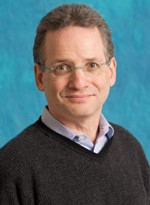
Ite A. Laird-Offringa, PhD., USC Norris Comprehensive Cancer Center

May 16th, 2012

The Laird-Offringa laboratory is focused on identifying changes in the genetic material (DNA) of lung cancer cells, to help us understand how lung cancer develops, and to use as markers for early detection. The kind of molecular change we study is called DNA methylation. DNA methylation is a chemical modification of DNA that doesn’t change the genetic sequence, but does change the way the DNA looks to a cell. Excessive methylation leads to the silencing or inactivation of genes. In cancer cells, DNA methylation is now recognized as a key molecular mechanism for the inactivation of so-called “tumor suppressor genes”. If one thinks of the genetic material as a very thick textbook, with instructions for the cell, DNA methylation can be thought of as post-it notes stuck to the beginning of certain chapters, instructing these chapters to be skipped. The pattern of methylation, or the “methylation profile”, is not the same for all types of cancer. Thus, abnormal methylation changes could provide important insights into the changes that lead to a particular kind of cancer. In addition, they could yield powerful biomarkers that may help the detection of different kinds of cancer.

Lung cancer is the leading cause of cancer death in the United States and Western Europe. Adenocarcinoma, the histological subtype most frequently seen in never smokers and former smokers, is now the most common type of lung cancer in men and women in the United States. The increasing incidence of lung adenocarcinoma and its lethal nature underline the importance of understanding the development and progression of this disease, and the need for the development of accurate tools for early diagnosis. Atypical adenomatous hyperplasia (AAH) and bronchioalveolar carcinoma (BAC), defined as non-invasive lesions, are thought to be sequential precursors along the path of progression to lung adenocarcinoma. Elucidation of the molecular changes underlying the development and progression of lung adenocarcinoma is of great importance for devising targeted drugs and methods of early detection.

Changing the Face of Lung Cancer: Keasha Rutledge Draft

May 12th, 2012

Keasha Rutledge Draft

May 13, 1973 – December 27, 2011

Lakeasha Monique Rutledge Draft passed away on Tuesday, December 27.  She courageously faced lung cancer, showing us all with every breath that we all need to hold onto life and love with both hands for as long as we can.  Not just an inspiration, but a light, and a force that led the way with a beautiful, sweet smile and bright shining eyes that both belied the pure steel of her strength and determination.

Strong is too pale, too shallow and too small of a word to describe Keasha’s vibrancy… Quite simply, she was ferocious. She fiercely held onto life, and love with a forcefulness that was absolutely awe-inspiring and completely breathtaking. Rest in peace, Mrs. Draft.

A Celebration of Keasha Rutledge Draft’s life will be held on Saturday, December 31st, 1pm at Calvary Baptist Church in Williamston, South Carolina.  She will be laid to rest following the Celebration at New Prospect Baptist Church.

In lieu of flowers, the family asks for support of Team Draft, the Chris Draft Family Foundation’s tribute to Keasha.  Team Draft was created by Chris and Keasha during her year-long struggle with lung cancer in hopes that her valiant fight to live, love, laugh and smile will give hope and comfort to people across the world.  Chris and Keasha, the Draft and Rutledge families, friends and loved ones ask for your support, and love, and thank you for joining Team Draft… because it takes a Team to tackle cancer!

Donations to Team Draft can be made via the Chris Draft Family Foundation’s website or via mail to the Foundation’s Atlanta office.


Psalm 23

The LORD is my shepherd; I shall not want.

He maketh me to lie down in green pastures: he leadeth me beside the still waters.

He restoreth my soul: he leadeth me in the paths of righteousness for his name’s sake.

Yea, though I walk through the valley of the shadow of death, I will fear no evil: for thou art with me; thy rod and thy staff they comfort me.

Thou preparest a table before me in the presence of mine enemies: thou anointest my head with oil; my cup runneth over.

Surely goodness and mercy shall follow me all the days of my life: and I will dwell in the house of the LORD for ever.


Scott M. Lippman, MD, UC San Diego Moores Cancer Center

May 12th, 2012

Scott M. Lippman, MD, chair of Thoracic/Head and Neck Medical Oncology at The University of Texas (UT) MD Anderson Cancer Center, has accepted the position of director of Moores Cancer Center at the University of California, San Diego, beginning May 1, 2012.
UC San Diego Moores Cancer Center, home to nearly 350 medical and radiation oncologists, cancer surgeons, and researchers, is one of only 41 National Cancer Institute (NCI)-designated comprehensive cancer centers in the country. It is part of UC San Diego Health System, the San Diego region’s only academic health system.
“As the new director, Lippman will implement strong initiatives for ramping up the research-driven cancer therapy and prevention programs and clinical trials of the Moores Cancer Center,” said David A. Brenner, MD, vice chancellor for Health Sciences and dean of the School of Medicine at UC San Diego. “His ultimate goal, and ours, is to facilitate the translation of novel discoveries from our world-class laboratories into personalized therapies. I am confident that under Dr. Lippman’s leadership, research at Moores Cancer Center will benefit our patients and change standards of care for decades to come.”

Abraham and Yolanda Almanza are Changing the Face of Lung Cancer

May 10th, 2012
Abraham and Yolanda

Abraham and Yolanda

My name is Abraham and I’m a lung cancer survivor

In 1998, I was diagnosed with stage IV lung cancer at the age of 15. I would later turn 16 in the hospital not knowing if I would live to see my 17th birthday.

Being the son of a smoker (who through Gods grace has now quit), my initial thought was that secondhand smoke had something to do with my diagnosis. The doctors could never pinpoint the exact cause of my cancer but would later tell me it was probably acquired in utero and it just happened to lodge itself in my lungs. Whatever the case may be, I had cancer and needed to fight to see another birthday.

Through the power of prayer, family and medicine I was successfully treated with 4 rounds of chemotherapy and radiation treatment.

Before cancer became a turning point in my young life, I was just like any other teenager. I played sports, had friends and excelled in academics. Although I was administered an annual physical to play sports in school, it was never discovered that I had a malignant cancer slowly taking over my body.

Although I missed over a half a year of my junior high school year, I was able to graduate on time. I went on to graduate from college where I studied Psychology and minored in Spanish. I would even live as a missionary through my church for a year. I was soaking up as much as I could with this new lease on life.

As any cancer survivor would tell you, in the back of your mind, you initially feel you’re living on borrowed time. Once things settled down though, I started to reflect on my life and wanted to share it with someone and build a family of my own.

Meeting my wife, Yolanda and her struggle living with Asthma

I met my wife Yolanda during the summer of 2008 and we connected instantly when she shared with me that she suffered from Asthma since childhood.

In her own words:

As a child I never thought twice about running around and being a kid until I had my first asthma attack at the age of 9. I still remember how scared and helpless I felt as I tugged on my mom’s shirt to signal that I was having difficulties breathing. My mother, being asthmatic herself, was quick to assess the situation and rushed me to the emergency room. As a sat in the emergency room, hooked onto the nebulizer, I knew I wasn’t alone. Other kids were there getting the same treatment and innocently I believed that it was normal to be asthmatic. As the years went by I took my daily dose of medication to keep my asthma under control.

As a teenager I was overweight and continued my daily cocktails of medication for my asthma. By freshman year in high school I was 5’9″ and weighed 215lb. That same year the volleyball coach took interest in me and invited me to try out for the volleyball team, my first words were, “I can’t play volleyball, I’m asthmatic.” The coach looked at me and smiled, “You can still play, that’s not a problem at all.” I was offended that she didn’t think of my asthma as being a problem. After having that conversation all I thought about was playing volleyball, I wanted to play but was scared. I consulted with my mother who then made an appointment to speak to doctor. I could not believe he gave me the okay to play under close supervision and using my inhaler before any physical activity. It was difficult to train my body to run and jump because I had used my asthma as an excuse to get out of any physical activities.

After four years of volleyball, basketball, and softball I found myself using my inhaler less frequently. I dropped 40 pounds and felt great until one night I felt something I had not felt in a long time, an asthma attack. The asthma attack was progressively getting worse but I was in disbelief that this was happening again. As tears ran down my face, I walked up to my dad and simply said, “I can’t breath.” My father quickly took me to the hospital, where I was told that my asthma was now diagnosed as seasonal or mild asthma. I felt like I was back to square one again.

As a young adult, I started researching ways to strengthen my lungs. I came across an article in which I read that swimming was a great way to improve and possibly even cure asthma. The only problem was that, I didn’t know how to swim. I looked into local pools in my community and signed up for swimming lessons. What started out as a way to stay healthy ended up becoming a lifeguard and learning to help others.

For many years I used my asthma as a crutch to be less active and now as an adult, I have learned to keep my asthma in check. Asthma did not stop me from accomplishing my goals and becoming a better, healthier me.

Our lives together

We were married in July 2010 and are committed to living a healthy lifestyle both with diet and exercise. If it weren’t for diligent parents and caring health professionals we would not be here to share our story.

May 2012 will be 15 years since my lung cancer diagnosis and my wife hasn’t had an asthma attack in over 10 years. We are truly blessed and hope to encourage others to make their health, body and soul a priority in their lives.

 Abraham and his wife Yolanda are from the Bronx, NY. Abraham graduated from Iona College in 2004, with a degree in Psychology and currently works for the Make-A-Wish Foundation of the Hudson Valley. Yolanda graduated from Lehman College with a degree in Speech Pathology and currently works for the Department of Education. She is currently completing her masters in teaching English to speakers of other languages – TESOL.

William Mayfield, MD, WellStar Cancer Center in Marietta, GA

May 8th, 2012

Dr. Mayfield earned his bachelor’s degree from Mercer University in Macon, Ga., and his medical degree from the Medical College of Georgia in Augusta. He completed his internship and residency at the University of California, Davis Medical Center in Sacramento, and his fellowship at the University of Florida College of Medicine Shands Hospital in Gainesville.

He serves as WellStar’s chief surgical officer, leading the surgeons and clinical teams that make up WellStar’s Surgery Network. His research and development efforts have focused on thoracoscopy instruments and innovative cardiac and thoracic surgical procedures, such as Video Assisted Thoracic Surgery (VATS).

Dr. Mayfield has been a driving force for WellStar’s cancer program, as well as participation in the International Early Lung Cancer Action Program (I-ELCAP), a lung cancer screening collaborative program. He is active in the development of novel instrumentation for surgery and teaches board certified thoracic surgeons about VATS procedures.

Dr. Mayfield is a fellow of the American College of Surgeons and Society of Thoracic Surgeons and is board certified in thoracic and cardiovascular surgery.

Taylor Bell is Changing The Face of Lung Cancer as a Survivor

May 7th, 2012

Growing up it was my dream to play soccer in college. I got that chance when Coach Rob Donnenwirth asked if I would like to come to ECU to play soccer.  When I got to ECU, I bonded with my teammates, loved my classes, and met some really awesome friends. The only problem was that I wasn’t performing at the level that I needed to on the field. I failed fitness test after fitness test and I was constantly physically exhausted. I had numbness and tingling in my toes and was having some trouble breathing when I exerted myself at a high level.  Other than those little symptoms, I felt great!

After several failed attempts to pass fitness test and always being tired we came to the decision that it might be a good time to run some medical test to see if we would figure out what was wrong. They found nothing. I convinced myself to think that I was just burnt out from the game.   After a year of frustration and complications I made the hardest decision of my life to stop playing soccer. I still had the same symptoms from before when I was exercising but not at the level it had been.

Two years later, in October of 2007, I presented to the emergency room with complaints of a lower abdomen pain where I thought my appendix was rupturing or having cramps but my sister insisted that female cramps were not that bad. They took me in and did a CT scan of my abdomen and my lungs showed up on the scan.
They told me that my ovaries did have some small cyst on them but that they thought that they were fine, but wanted to inform me that I had about a 3cm mass on my left lung. My heart sank!! Lung cancer runs in my family, but surely I did not have lung cancer or a tumor. I was 21 years old and a former college athlete and NEVER smoker.
After the night at the hospital I went home. The next two weeks we spent in doctors’ offices all over the state trying to see what this mass really was. No doctor thought it was possible for it to be lung cancer. After several test I finally got my answer when meeting with a surgeon. That doctor’s appointment was when I went into shock. He walked into my room and said Taylor I hear you have lung cancer. I freaked out¦ no one had said the word lung cancer yet because no one was sure.
My doctor told me that the mass was pretty large but that it was going to have to come out, but he felt comfortable that he would be able to do the small incision and get it all out. The only problem was that I was really sick.  After the first bronchoscope I developed really bad pneumonia, basically to the point that I could not walk. So we had to wait to have my surgery until I could pass a breathing test to prove that my lungs could handle the surgery.  I finally got well enough to have the surgery. On November 14, 2007, I had a VATS pneumonectomy.
After the surgery I was a mess. The chest tube was HORRIBLE!!!! I was in the ICU for 2 days and then moved to a step down unit. I had the chest tube in for about five days! They made me walk around the halls and I HATED it. It was so miserable.
I went home the day before thanksgiving, and went back to college after the New Year.  It was hard going back to school because all my friends really did not understand. It was hard for them also, because on the outside I did not look like I was sick, I looked like the normal Taylor Bell. But on the inside I was in a lot of pain.
It was also hard because it’s kind of an emotional roller coaster. I looked fine but I had just had a MAJOR surgery. I wanted to go on spring break, but I was nowhere well enough to go.  It was depressing.  I wanted to be like everyone else and have a good time, but I knew deep down my body could not handle it.
Spring break week was probably when the fact that I had lung cancer hit me. The months before it all happened so fast I did not even think about it¦ it went from diagnoses, to surgery, to recovery, to class starting. One thing after another with really no time to think about what I was going through.
I was a mess that week. I did not want my parents or my friends to see that I was upset. I think the hardest part was that I looked fine. I did not lose my hair I did not have a big scars¦ I looked normal.  I was still in a lot of pain, and I was so upset that I could not be with everyone. Cancer is kind of strange because you have a lot of thoughts that go through your head. You think a lot about it. Or what did I do to deserve this. Spring break week I thought a lot about it and that’s when I realized this happened to me because I am a strong enough person to handle it.  I made it through and I am ALIVE and that’s when I realized I HAVE to do something to speak up for everyone who has lost their life.
I now do as much public speaking and advocacy about lung cancer as I possibly can.  I am a member of Jillian’s Legacy which is an organization that was formed in honor of Jillian Costello who like me was a division 1 college athlete who was diagnosed with lung cancer at the age of 21. Jill fought with such grace and determination. When she passed away a group of friends decided that we needed to do something in her honor. She did not just want to beat lung cancer for herself but her goal was to beat lung cancer for everyone.

I think one of the greatest obstacles with lung cancer is getting people to break the stigma. Every time I say that I had lung cancer the first words I hear are Oh you smoked?”  Well no actually I have not, and I have never been around second hand smoke either. Then their next question is a oh it must run in your family then and then my answer is well yes it does, but there is very little funding to do research to tell if there is a genetic link.
Breaking that stigma is hard. When someone tells you the have breast cancer or they had brain cancer they donate ask any questions as to how they got it. Why do they do it with lung cancer? No one deserves this disease whether they smoked or not and everyone deserves the same compassion.
My main goal is to get the message out that this can happen to young people and people who have never smoked, it can happen to anyone. Lung Cancer does NOT discriminate. And even if they have made the choice to smoke at some point in their life they still deserve the same compassion as anyone who is fighting for their life.  And that lung cancer deserves way more funding than what it gets right now!!
When I was first diagnosed I used to think “why me” now I think “why not me?”   My diagnosis has shaped me into such a strong person and has given me the avenue to make a difference in people’s lives that have to fight this battle as well.


Changing the Face of Lung Cancer

May 7th, 2012

On July 4, 2007, Leah’s doctor announced that she had Stage IV lung cancer. It sent my mind into a tailspin – Leah never indulged in cigarettes! Her response to the diagnosis was a simple question to the doctor, asking when she could go back to work. I looked at my daughter with amazement and hope. In the beginning, Leah stayed in survival mode, showing signs of strength and endurance, while suffering the effects of potent chemotherapy treatments and a host of other medications. Doctors beamed with amazement at her early positive response. I was sure it was a miracle and it increased our hope for her survival. Leah lost her battle with lung cancer on Sunday, March 29, 2008 at the age of 41 years. She is an inspiration to me. Her strength encourages me to focus on my commitment to support a memorial in her name, raising funds for lung cancer research to help increase the survivor rate.


Note: The affects of tobacco smoke on our health remains an ongoing issue because second hand smoke can cause more harm than direct smoking. Scientific research informs us about this danger and tells us what to do about it. Knowledge is power! This is a step toward preventing illnesses like lung cancer.

Changing the face of Lung Cancer

May 7th, 2012

Our son was diagnosis with Osteosarcoma (form of soft tissue and bone cancer) back ’05 he has gone through chem and above the knee amputation.  Last year it was discovered in his left lung. He has had three surgeries to remove but on the fourth surgery it was discover he has cancer between his chest cavity and his left lung. The doctor said there was nothing he could do at this point because of the scar tissue and bleeding. He has gone through 4 weeks of radiation to kill one area in the lungs but know we are waiting on a Phase 1 study at John Hopkins to open up.  Osteosarcoma doesn’t get the same attention as other high profiled cancers we are fighting to change this.

We are standing on God’s decision that he will be healed, He give us the promise last year but this year we are standing firm on His decision.

Chris our family is standing with your family to find a cure for cancer no matter what type of cancer it is.

God Bless you and your family!!

Siteman Cancer Center and Genome Institute at Washington University

April 27th, 2012

Ramaswamy Govindan, MD is the director of the thoracic oncology program at Washington University School of Medicine. He is the principal investigator of several institutional, cooperative group, and other multicenter studies. One of his main areas of research is to use genomics to predict outcomes in non-small cell lung cancer. He has authored and coauthored more than 100 publications in peer reviewed prestigious journals. He is the editor of the ASCO Educational Book, Washington Manual of Oncology, and the Review Book based on DeVita’s Cancer Principles and Practice of Oncology. Dr Govindan received his medical degree at the University of Madras, Madras, India, completed an internship and residency in internal medicine at Michael Reese Hospital and Medical Center in Chicago, Illinois, and was a fellow in hematology/oncology at Washington University School of Medicine in St. Louis, Missouri. He is board certified in medical oncology.

Team Draft in St. Louis: Former Ram Chris Draft Spreads Cancer Prevention Message to Siteman

April 27th, 2012

As the Rams welcome newly drafted Louisiana State defensive tackle Michael Brockers to the fold today, we welcomed former Rams linebacker Chris Draft to our Siteman Cancer Center this morning. Draft visited with lung cancer expert Ramaswamy Govindan, MD to learn more about targeted therapies for cancers.

It’s important to Draft as he started the Chris Draft Family Foundation after the passing of his wife Keasha last year to lung cancer. While the vast majority of lung cancers are directly tied to cigarette smoking, Keasha had never smoked.

Draft was very much part of the community when he played for the Rams and as an asthmatic, he was a big part in getting across the message that smoking is dangerous.

It’s also the message of Team Draft. According to his website, “Team Draft was created by Chris and Keasha during her year-long struggle with lung cancer in hopes that her valiant fight to live, love, laugh,and smile will give hope and comfort to people around the world. Team Draft is working to save lives by changing the face of lung cancer, but it takes a team to tackle cancer, and we need your help.”

For more about Draft and his visit to Siteman, watch this interview with John Pertzborn from this morning’s FOX2 News.